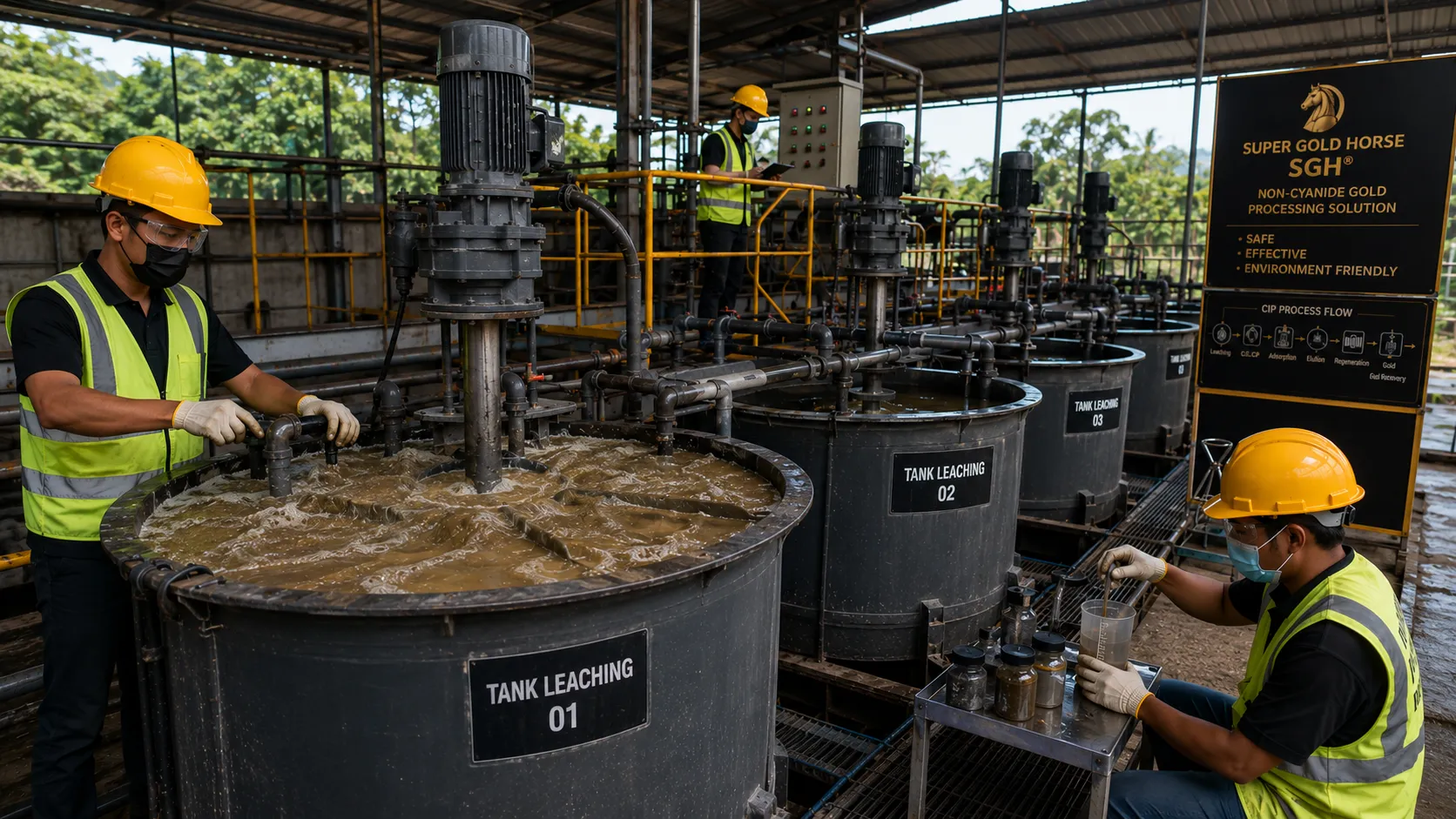
TANK LEACHING METHOD

Controlled Gold Leaching Through Agitated Tank Processing

Tank leaching processes finely ground gold ore as a slurry inside mechanically agitated tanks. Controlled mixing and aeration help maintain contact between the ore, solution, oxygen, and leaching reagent throughout the process.

SUPER GOLD HORSE® can be evaluated as an alternative gold-leaching reagent within a controlled tank-leaching configuration. Appropriate operating conditions must be established through representative laboratory or pilot-scale testing before commercial implementation.

  • Controlled agitation
  • Managed aeration
  • Adjustable pH and reagent dosage
  • Defined residence time
  • Activated-carbon recovery
  • Site-specific process evaluation

Technical context: Tank configuration, recovery performance, and operating parameters depend on ore mineralogy and tested process conditions.

Modern agitated-tank gold-processing facility used for controlled tank-leaching evaluation
Controlled Process Evaluation
tank leaching
PROCESS OVERVIEW

From Representative Ore to Controlled Gold Recovery

Tank leaching combines ore preparation, slurry conditioning, controlled leaching, and downstream gold recovery in an integrated processing pathway. Each stage influences metallurgical performance and should be evaluated according to the characteristics of the ore.

ORE UNDERSTANDING

Ore Characterization

Representative ore samples are evaluated for gold grade, mineralogy, liberation characteristics, sulfide content, base metals, clay, and potential preg-robbing behavior.

ORE PREPARATION

Grinding and Slurry Preparation

The ore is crushed and ground to an appropriate liberation size, then mixed with water to form a pumpable slurry. The required particle size and percentage of solids should be determined through metallurgical testing.

SLURRY CONDITIONING

pH Conditioning

The slurry pH is adjusted and monitored according to the selected reagent and tested process conditions. In the reported Sucofindo CIL test, SGH® was evaluated at pH 11.5–12.

REAGENT CONTROL

SGH® Addition

SGH® is introduced at a controlled dosage. Reagent dosage should be optimized against gold recovery, reagent consumption, solution chemistry, and residue characteristics.

PROCESS CONTACT

Agitation and Aeration

Mechanical agitation keeps ore particles suspended and distributes the reagent throughout the slurry. Air or oxygen may be supplied to support the leaching reaction and maintain suitable operating conditions.

MONITORED LEACHING

Controlled Leaching

The slurry remains in the system for a defined residence time. pH, dissolved oxygen, reagent concentration, slurry density, and gold dissolution response should be monitored.

GOLD ADSORPTION

Activated-Carbon Recovery

Dissolved gold can be captured using activated carbon through a CIP or CIL configuration, subject to confirmation of adsorption performance under the tested conditions.

DOWNSTREAM MANAGEMENT

Loaded Carbon and Residue Management

Loaded carbon is separated for further gold-recovery evaluation. The barren solution and solid residue are characterized before reuse, further treatment, or responsible management.

PROCESS CONFIGURATION

Understanding the Difference Between CIP and CIL

Tank leaching can integrate activated-carbon recovery through Carbon-in-Pulp or Carbon-in-Leach. Both configurations use carbon to capture dissolved gold, but the timing and location of carbon addition are different.

CARBON-IN-PULP

Sequential Leaching and Adsorption

01 Dedicated Leaching
02 Carbon Adsorption

Gold is first dissolved in dedicated leaching tanks. The slurry then moves to a separate adsorption circuit where activated carbon captures the dissolved gold.

Potential considerations

  • Leaching and adsorption can be controlled separately.
  • Performance can be evaluated at each process stage.
  • Additional tanks and process-transfer stages may be required.
  • Suitability depends on leach kinetics and solution behavior.

CARBON-IN-LEACH

Simultaneous Leaching and Adsorption

01 Leaching + Carbon Adsorption

Activated carbon is present during the leaching circuit, allowing dissolved gold to be captured as leaching progresses.

Potential considerations

  • Leaching and adsorption occur within the same circuit.
  • Earlier gold capture may help reduce certain solution losses.
  • CIL may help mitigate preg-robbing under suitable conditions.
  • Carbon activity and slurry–carbon separation require careful control.

CONFIGURATION COMPARISON

Key Evaluation Areas

Comparison of Carbon-in-Pulp and Carbon-in-Leach configurations
Evaluation Area CIPCarbon-in-Pulp CILCarbon-in-Leach
Leaching and adsorption Separate stages Combined circuit
Carbon addition After primary leaching During leaching
Process control Independent stage control Integrated control
Number of stages Potentially more Potentially more compact
Preg-robbing consideration Requires specific evaluation May help mitigate early gold losses
SGH® evidence currently available Not directly tested Laboratory test available
CONTROLLED LABORATORY EVALUATION

SGH® Performance Under Reported CIL Test Conditions

PT Sucofindo conducted a controlled laboratory Carbon-in-Leach test to compare SGH® and sodium cyanide using the submitted gold-ore sample. The results provide an initial technical reference for SGH® under the specific conditions reported.
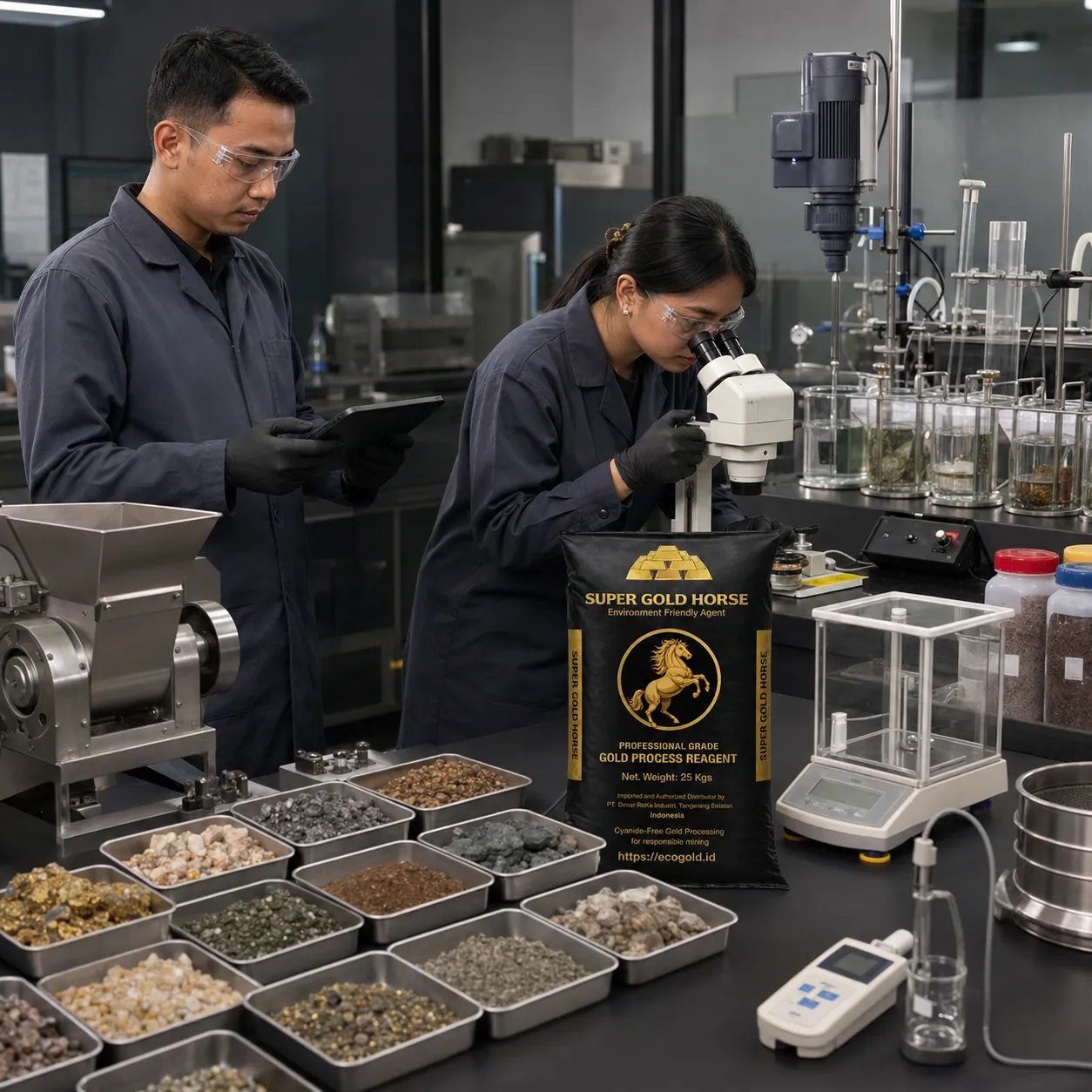
Controlled metallurgical laboratory evaluation of gold-ore leaching conditions
Controlled Carbon-in-Leach evaluation

REPORTED TEST CONDITIONS

Defined Laboratory Parameters

Head grade
5.02 ppm Au
Ore sample
1,100 grams
Particle size
P80 200 mesh
Pulp density
40% solids
Test duration
48 hours
SGH® pH
11.5–12
SGH® dosage
1,000 and 2,000 g/t
NaCN dosage
1,000 and 2,000 g/t
Activated carbon
41.25 grams
Analysis
Fire assay and AAS

REPORTED RECOVERY RESULTS

Comparative CIL Test Data

Results for the submitted sample under the specified 48-hour test conditions.

Reported CIL recovery results for SGH and sodium cyanide
Reagent Dosage Au Recovery Residue Au
SGH® 1,000 g/t 69.65% 1.66 ppm
SGH® 2,000 g/t 71.74% 1.56 ppm
NaCN 1,000 g/t 72.95% 1.46 ppm
NaCN 2,000 g/t 75.64% 1.28 ppm

MAIN FINDING

3.90 Percentage-Point Difference Under the Reported Conditions

At a dosage of 2,000 g/t, SGH® achieved 71.74% gold recovery, compared with 75.64% for NaCN under the reported conditions—a difference of 3.90 percentage points.

ACTIVATED-CARBON OBSERVATION

Gold Distribution to Activated Carbon

69.38%SGH® at 1,000 g/t
71.61%SGH® at 2,000 g/t

This provides initial evidence that gold processed using SGH® was captured by activated carbon in the tested CIL configuration.

SITE-SPECIFIC EVALUATION

Parameters Requiring Project-Specific Evaluation

  • 01Ore mineralogy and gold liberation
  • 02Grind size
  • 03Percentage of solids
  • 04SGH® dosage
  • 05pH
  • 06Dissolved oxygen and aeration
  • 07Agitation intensity
  • 08Leaching time and kinetics
  • 09Activated-carbon activity and dosage
  • 10Preg-robbing behavior
  • 11Base-metal interference
  • 12Reagent consumption
  • 13Gold remaining in residue
  • 14Solution and residue characteristics
SITE-SPECIFIC IMPLEMENTATION

Build the Tank-Leaching Process Around Your Ore

Every ore body responds differently to grinding, leaching, aeration, and activated-carbon recovery. A structured evaluation pathway is therefore necessary before selecting a CIP or CIL configuration or moving toward commercial-scale implementation.
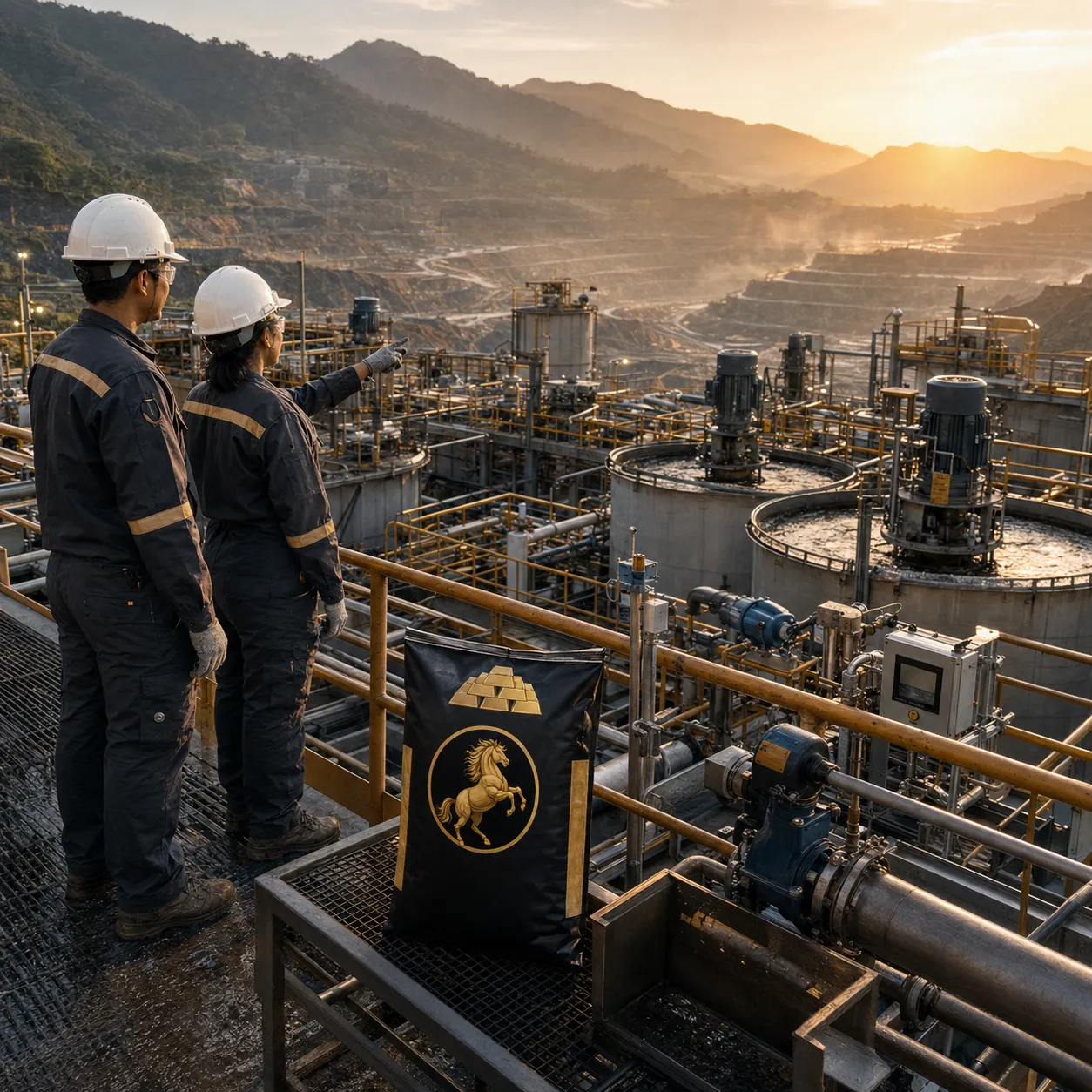
Evidence before implementation Move from representative samples to controlled testing and pilot confirmation.
Technical evaluation of a controlled tank-leaching process using representative ore conditions
Site-specific process evaluation

RECOMMENDED EVALUATION PATHWAY

From Preliminary Information to Pilot Evaluation

01

PROJECT CONTEXT

Submit Preliminary Ore Information

Provide available information about ore grade, mineralogy, current processing method, production scale, existing equipment, and recovery objectives.

02

REPRESENTATIVE SAMPLING

Characterize a Representative Sample

Assess mineralogy, liberation, sulfide content, base metals, clay, organic carbon, and potential preg-robbing characteristics.

03

CONTROLLED TESTWORK

Conduct Controlled Leach Testing

Evaluate SGH® dosage, pH, pulp density, aeration, agitation, and leaching duration using representative samples.

04

TIME-BASED RESPONSE

Measure Leaching Kinetics

Review gold dissolution at selected intervals, such as 6, 12, 24, 36, and 48 hours, to identify an appropriate residence time.

05

CARBON CONFIGURATION

Evaluate CIP or CIL

Compare sequential and simultaneous carbon adsorption when required, including carbon dosage, activity, loading, and separation behavior.

06

DOWNSTREAM CONFIRMATION

Review Downstream Recovery

Confirm loaded-carbon handling, elution compatibility, electrowinning response, carbon regeneration, and final gold recovery before defining a complete process route.

07

MATERIAL MANAGEMENT

Characterize Solution and Residue

Evaluate barren solution, solid residue, potential recycling, impurity build-up, and appropriate environmental-management requirements.

08

SCALE-UP EVALUATION

Proceed to Pilot Evaluation

Use pilot-scale testing to confirm operability, material balance, reagent consumption, recovery consistency, and process-control requirements before commercial implementation.

START A TECHNICAL EVALUATION

Evaluate SGH® Using Your Own Ore and Process Conditions

Contact the EcoGold technical team to discuss your ore characteristics, existing tank-leaching configuration, laboratory-testing requirements, or the potential evaluation of SGH® through a controlled CIP or CIL test pathway.

To help define the evaluation scope: Share preliminary information on ore grade, mineralogy, grind size, current reagent, production capacity, existing equipment, and recovery objectives.
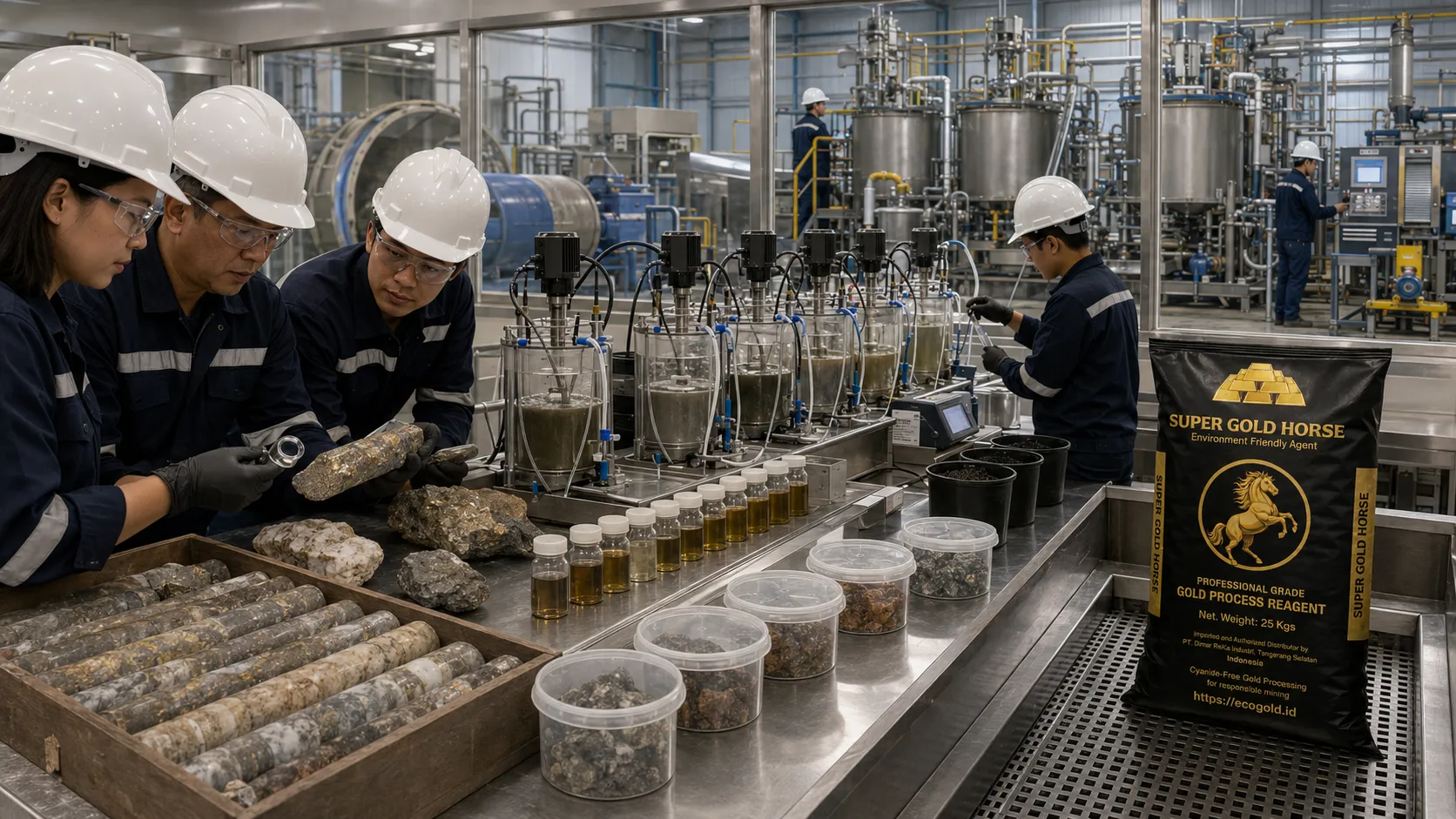
INTERACTIVE PROCESS EVALUATION

Tank Leaching with SGH®

Explore a site-specific evaluation pathway from representative ore information to pilot confirmation. This educational simulation does not predict or guarantee gold recovery.

Evaluation model — not a plant-design calculation
Carbon configuration
STAGE 01 · PROJECT CONTEXT

Submit Preliminary Ore Information

CIL pathway

Provide available ore grade, mineralogy, current processing method, production scale, existing equipment, and recovery objectives.

CURRENT EVALUATION FOCUS Collect ore and process information
REQUIRED CONFIRMATION Representative characterization has not been completed
Important technical boundaries
  • Changing an input updates the evaluation scenario only; it does not calculate recovery.
  • Recovery varies according to ore mineralogy and tested operating conditions.
  • The existing report supports laboratory-scale CIL evaluation; CIP performance requires direct testing.
  • Elution, electrowinning, carbon regeneration, solution recycling, and pilot operability require separate confirmation.
  • TCLP results relate only to the submitted residue samples and do not constitute automatic regulatory approval or a universal environmental-safety conclusion.