Human Safety
Strengthen operating discipline through appropriate training, controlled material handling, protective equipment, and clearly defined working procedures.

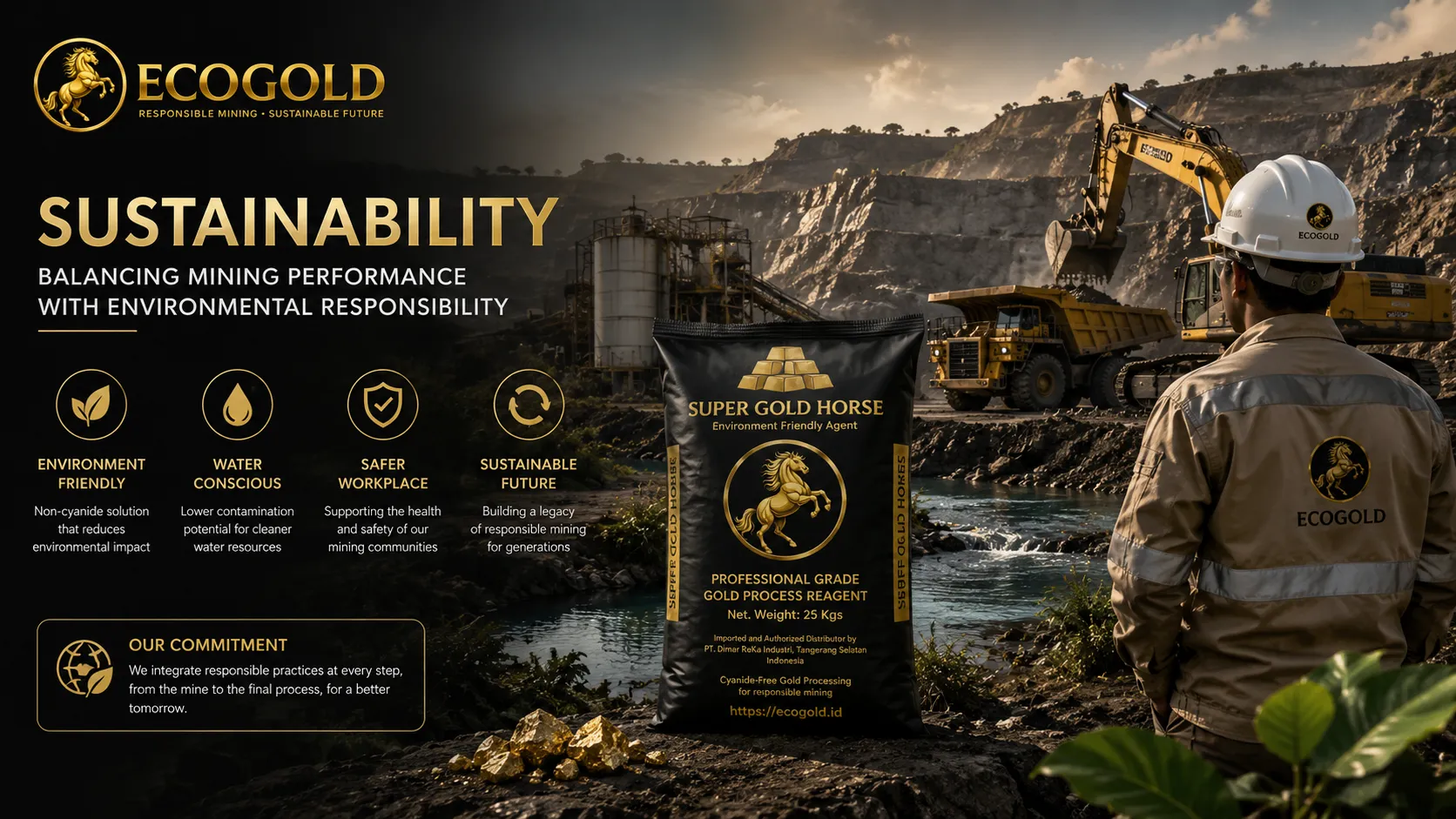
Responsible mining connects mineral production with worker safety, environmental stewardship, transparent governance, and long-term operational resilience.
For gold-processing operations, this means evaluating not only recovery performance, but also reagent handling, process control, water and residue management, technical documentation, and the conditions required for responsible implementation.
Strengthen operating discipline through appropriate training, controlled material handling, protective equipment, and clearly defined working procedures.
Consider water, residue, emissions, land, and surrounding ecosystems throughout testing, operation, monitoring, and long-term rehabilitation planning.
Use defined methodologies, traceable technical information, controlled comparisons, and responsible interpretation of laboratory and operational data.
Support stable performance through risk awareness, process control, efficient resource use, technical readiness, and continuous improvement.
A high recovery result does not automatically describe reagent consumption, solution behavior, residue characteristics, worker exposure, water requirements, or performance at commercial scale. These factors must be evaluated together and interpreted within the tested conditions.
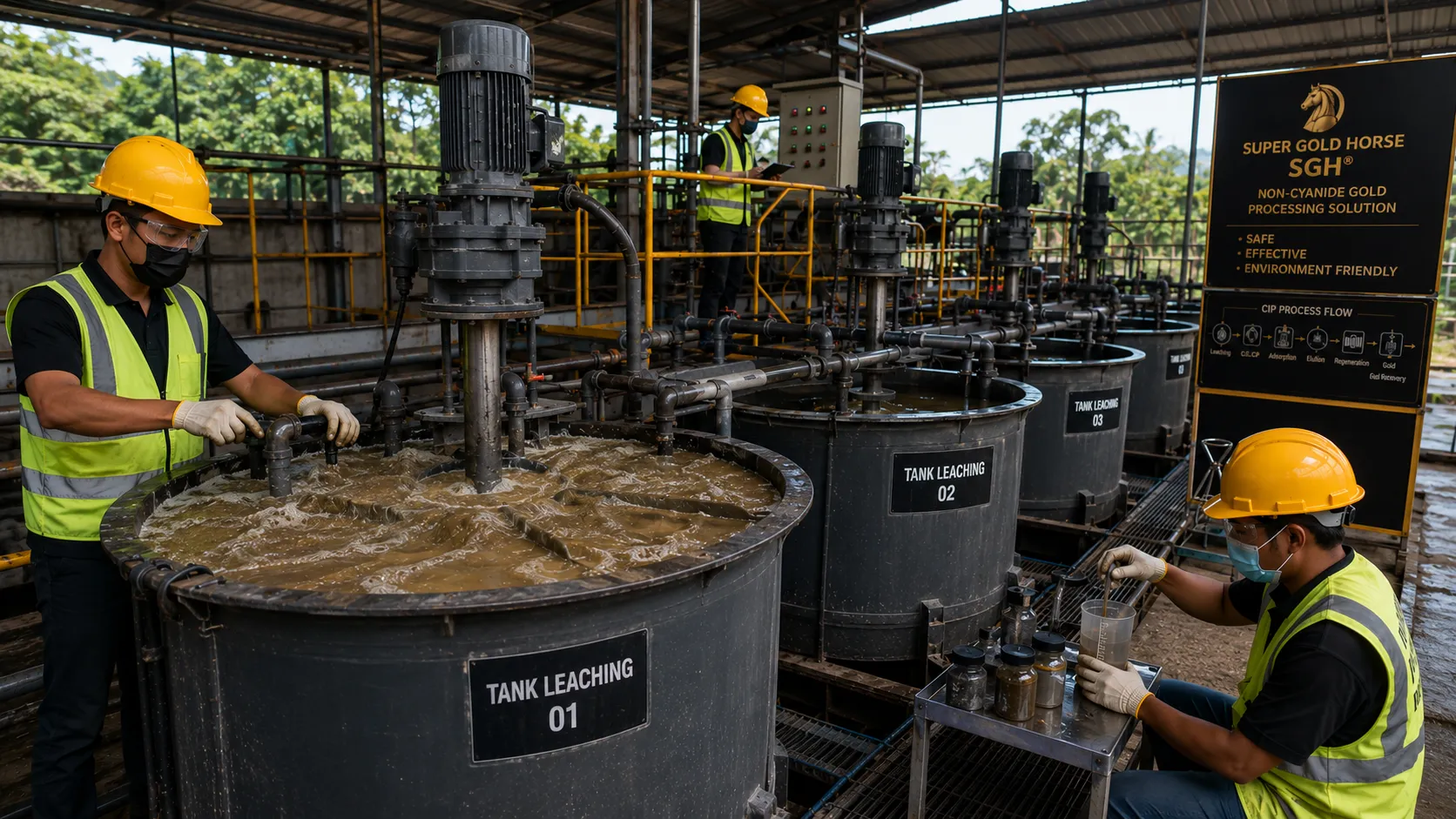
EcoGold supports mining operators, laboratories, and technical partners in evaluating responsible gold-processing alternatives through structured technical discussion, controlled testing, and evidence-based interpretation.
Introduce SUPER GOLD HORSE® as an alternative reagent for evaluation under appropriate ore, process, and operating conditions.
Evaluate representative ore samples because mineralogy, grade, particle size, liberation, and process chemistry can significantly influence performance.
Review reagent dosage, pH, leaching duration, aeration, carbon conditions, solution behavior, and recovery response within a defined test scope.
Connect results only to the submitted samples, reported procedures, and specified conditions—without extending laboratory findings beyond their technical scope.
Every project begins with context. A structured pathway helps determine whether further laboratory, comparative, or pilot-scale evaluation is appropriate.
Provide ore grade, mineralogy, current method, production scale, recovery, and project objectives.
Determine representative samples, methodology, comparison basis, parameters, and evaluation criteria.
Observe metallurgical response under defined laboratory or pilot-scale conditions.
Interpret recovery and process data before considering optimization or broader implementation.
SUPER GOLD HORSE® suitability and metallurgical performance cannot be determined from general industry information alone. Results may vary according to ore mineralogy, grade, particle size, reagent dosage, pH, water chemistry, leaching duration, aeration, carbon conditions, equipment, and other operating variables. Representative testing is recommended before commercial-scale implementation.
Share your preliminary ore and process information with the EcoGold technical team to discuss an appropriate evaluation pathway.