TECHNICAL DATA & LABORATORY ANALYSIS

Laboratory Analysis of SGH® Performance and Leach Residue

Explore laboratory-reported data covering two different aspects of gold processing: metallurgical recovery performance and solid leach residue characterization.

EcoGold presents laboratory analysis to support a more transparent and technically informed evaluation of SUPER GOLD HORSE® (SGH®). The available reports examine two distinct areas: gold recovery performance under controlled Carbon-in-Leach conditions and the analytical characterization of solid leach residues using the Toxicity Characteristic Leaching Procedure.

Each analysis should be interpreted according to its respective sample, methodology, analytical scope, and laboratory conditions.

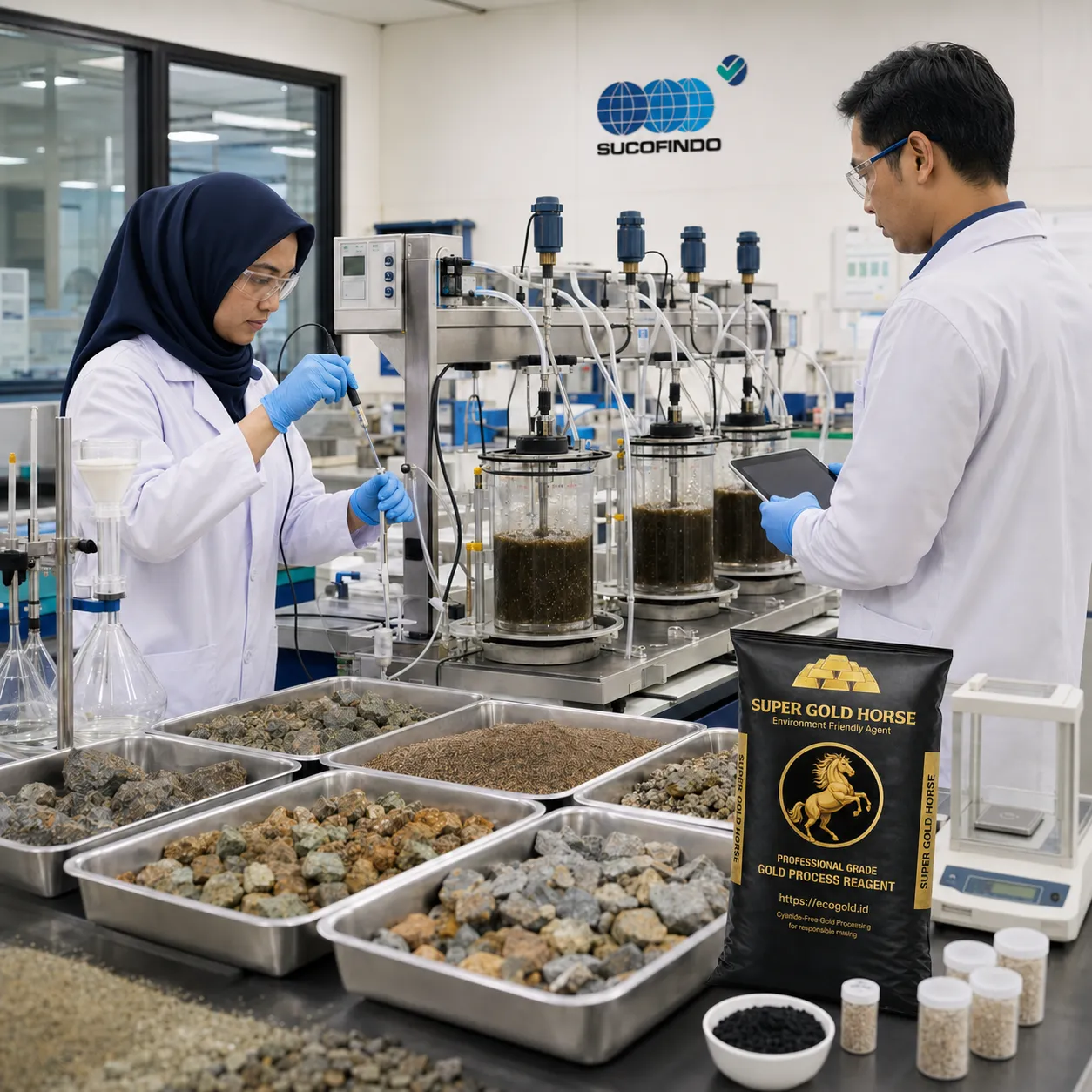
Mineral laboratory analysis involving gold ore, activated carbon, solid residue samples, and SGH product
Analysis 01CIL Recovery
Analysis 02TCLP Residue
Two analytical perspectives Performance & Residue Characterization
2 Technical Analyses

Metallurgical performance and residue characterization

CIL Recovery Test

SGH® compared with sodium cyanide

TCLP Analysis

SGH® and NaCN solid leach residues

Laboratory-Reported Data

Presented with test scope and limitations
TWO COMPLEMENTARY TECHNICAL PERSPECTIVES

Performance and Residue Require Different Evaluations

Gold recovery and residue characterization answer different technical questions. The metallurgical CIL test evaluates how much gold was recovered under controlled processing conditions. The TCLP analysis characterizes the reported concentrations of selected constituents extracted from submitted solid residue samples under a specified laboratory method.

Reading both analyses provides a broader technical perspective, while each report remains limited to its own purpose and test conditions.

Process input Gold Ore & Reagent
Controlled test CIL Processing
01
Metallurgical outputRecovery Performance

How much gold was recovered?

02
Submitted solid sampleLeach Residue

What was reported in the TCLP extract?

Analysis 01Carbon-in-Leach Test

Metallurgical Performance

Question answered

How did SGH® perform in gold recovery under the tested CIL conditions?

What was analyzed
  • Head grade
  • Reagent dosage
  • Gold recovery
  • Residual gold
  • Solution gold
  • Activated carbon gold distribution

Evaluates metallurgical performance under the tested conditions. It is not an environmental-impact or toxicity assessment.

Analysis 02TCLP Characterization

Residue Characterization

Question answered

What constituent concentrations were reported from the submitted solid residue samples under TCLP conditions?

What was analyzed
  • Inorganic parameters
  • Anions
  • Organic compounds
  • Pesticides
  • Additional parameters

Characterizes submitted samples under a specified extraction method. It is not a gold-recovery test or a universal regulatory conclusion.

LABORATORY ANALYSIS LIBRARY

Explore the Complete Laboratory Analyses

Review two distinct technical analyses covering metallurgical recovery performance and solid leach residue characterization. Select a report below to explore its methodology, results, interpretation, and scope in detail.

2 Technical analyses 2 Different test purposes 1 Technical data library
METALLURGICAL PERFORMANCE Analysis 01 · Carbon-in-Leach
View report

Comparative CIL Metallurgical Test: SGH® vs NaCN

A controlled Carbon-in-Leach laboratory test compared gold recovery using SGH® and sodium cyanide at equivalent reagent dosages of 1,000 and 2,000 gpt.

01Test Overview
Test method
Carbon in Leach
Ore head grade
5.02 ppm Au
Leaching duration
48 hours
Dosages
1,000 & 2,000 gpt
Testing laboratory
PT SUCOFINDO
02Key Reported Results
Comparative CIL gold recovery results
DosageNaCN RecoverySGH® RecoveryDifference
1,000 gpt72.95%69.65%3.30 pp
2,000 gpt75.64%71.74%3.90 pp

pp = percentage points

Interpretation under the tested conditions

Under the tested conditions, SGH® achieved gold recoveries of 69.65% and 71.74%. The report described the recovery results produced by SGH® and sodium cyanide as relatively comparable for the specific ore sample tested.

Open the detailed analysisView Complete CIL Metallurgical Test
SOLID RESIDUE CHARACTERIZATION Analysis 02 · TCLP
View report

TCLP Analysis of SGH® and NaCN Leach Residues

TCLP analysis was conducted on submitted solid leach residue samples identified as SGH® and NaCN residues. The analysis reports constituent concentrations obtained under US EPA SW-846 Method 1311 extraction conditions.

01Test Overview
Sample type
Solid residue
Test method
TCLP
Extraction method
US EPA SW-846 Method 1311
Samples
SGH® & NaCN residues
Reported unit
mg/L
02Analytical Coverage
  • Inorganic parameters
  • Anions
  • Organic compounds
  • Pesticides
  • Additional parameters
03Selected Reported Results
Selected TCLP results for SGH and NaCN leach residues
ParameterSGH® ResidueNaCN Residue
Total cyanide*<0.01 mg/L<0.01 mg/L
Arsenic0.01 mg/L<0.01 mg/L
Barium0.09 mg/L0.15 mg/L
Zinc0.05 mg/L0.08 mg/L
Mercury<0.01 mg/L<0.01 mg/L
Lead<0.01 mg/L<0.01 mg/L
Cadmium<0.01 mg/L<0.01 mg/L

*Important: Total cyanide was marked with an asterisk in the report, indicating that the parameter was stated as outside the scope of KAN accreditation. The report does not provide a regulatory pass/fail conclusion.

Interpretation under specified TCLP conditions

The results characterize the submitted residue samples under the specified TCLP laboratory conditions. They should not be interpreted as representing every possible operating, disposal, or environmental condition.

Open the detailed analysisView Complete SGH® TCLP Analysis
RESPONSIBLE DATA INTERPRETATION

Understanding What Each Analysis Can—and Cannot—Conclude

Laboratory data is most useful when interpreted within the boundaries of the tested samples, analytical methods, and operating conditions. The results presented on EcoGold’s technical pages are intended to support evaluation and further discussion, not to replace site-specific metallurgical, environmental, engineering, or regulatory assessment.

Evidence within scope

What the Reports Provide

Information directly connected to the submitted samples, reported procedures, and specified laboratory conditions.

  • Measured Results

    Measured results for the submitted samples.

  • Defined Methodology

    Defined laboratory methods and procedures.

  • Controlled Comparison

    Comparative data under specified test conditions.

  • Recovery Measurements

    Metallurgical gold recovery measurements.

  • Residue Characterization

    TCLP constituent characterization of submitted residue samples.

  • Further Evaluation

    A technical basis for continued evaluation and discussion.

Interpretation boundaries

What the Reports Do Not Automatically Provide

Conclusions that require additional evidence, site-specific assessment, engineering review, or regulatory determination.

  • Universal Ore Performance

    Universal recovery performance for every ore body.

  • Commercial Guarantee

    A guarantee of equivalent commercial-scale results.

  • Complete Safety Assessment

    A complete worker-safety assessment.

  • Complete Impact Assessment

    A complete environmental-impact assessment.

  • Waste Classification

    A regulatory waste-classification decision.

  • Universal Pass or Fail

    A universal regulatory pass/fail conclusion.

  • Replacement for Site Testing

    A substitute for representative site-specific testing.

Responsible technical communication: Transparency about test scope and interpretation boundaries strengthens the value of laboratory data for mining companies, consultants, engineers, and other technical readers.

Mineral laboratory evaluation of representative gold ore samples and SGH reagent
Representative sample evaluation From Ore Characteristics to Test Planning
NEXT STEP

Evaluate SGH® Using Your Own Ore Characteristics

Every ore body has a different mineralogical and metallurgical response. Laboratory or pilot-scale testing using representative ore samples can help identify suitable reagent dosage, pH, leaching duration, carbon conditions, and other process parameters before full-scale implementation.

Contact the EcoGold technical team to discuss your current processing method, ore characteristics, recovery objectives, and appropriate testing pathway.

Begin your evaluationRequest a Site-Specific Metallurgical Test
Technical evaluation pathway

From Preliminary Information to Process Planning

A structured testing pathway helps connect representative ore data with technically appropriate evaluation and process decisions.

  1. 01

    Submit Preliminary Information

    Share ore grade, mineralogy, processing method, and current recovery.

  2. 02

    Define the Test Scope

    Determine appropriate laboratory or pilot-scale evaluation.

  3. 03

    Review the Results

    Interpret the data according to the tested conditions.

  4. 04

    Plan Process Optimization

    Evaluate suitable parameters before commercial implementation.

Technical context: Testing scope, sample quantity, methodology, and evaluation pathway should be determined according to the characteristics and objectives of each project.